


Boiler desulfurization and denitrification equipment for heating companies
Contact Info
- Add:Changle Village, Wangwu Town, Botou City, Zip: 062155
- Contact: 常守峰
- Tel:13011424488
- Email:747569321@qq.com
Other Products


Heating Company Boiler Desulfurization and Denitrification Equipment
Heating company boiler desulfurization and denitrification equipment is a key environmental protection device for reducing sulfur dioxide (SO₂) and nitrogen oxides (NOx) emissions from coal-fired boilers. It plays a significant role in improving air quality and meeting environmental standards. The following provides a detailed introduction from aspects such as equipment types, technical principles, selection points, market status, and case studies:
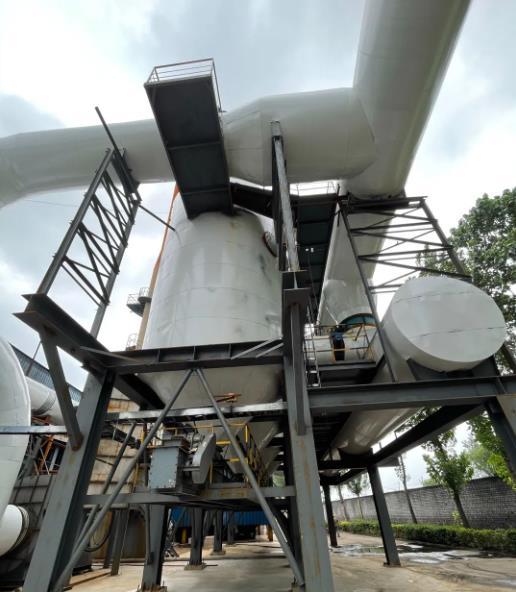
I. Equipment Types and Technical Principles
1. Desulfurization Equipment
Wet Desulfurization:
Uses alkaline desulfurizing agents (such as limestone slurry or sodium hydroxide solution) to chemically react with SO₂ in the flue gas, producing byproducts like gypsum (CaSO₄) or sulfites.
Characteristics: High desulfurization efficiency (up to 95% or more), mature technology, but requires high equipment investment and operating costs, and necessitates wastewater treatment.
Dry Desulfurization:
Uses dry agents (such as activated carbon or calcium oxide) to adsorb SO₂ from the flue gas, followed by desorption or regeneration to recover sulfur resources.
Characteristics: No wastewater discharge, but lower desulfurization efficiency (about 70%-80%), suitable for small boilers or dry regions.
2. Denitrification Equipment
Selective Catalytic Reduction (SCR):
Injects ammonia water or urea solution into the flue gas under the action of a catalyst, reducing NOx to nitrogen (N₂) and water (H₂O).
Characteristics: High denitrification efficiency (up to 90% or more), mature technology, but catalyst costs are high, and reaction temperature must be controlled (180-420°C).
Selective Non-Catalytic Reduction (SNCR):
Directly injects reducing agents (such as urea solution) into high-temperature flue gas (850-1100°C), reducing NOx to N₂ without a catalyst.
Characteristics: Low equipment investment, but lower denitrification efficiency (about 30%-60%), greatly affected by temperature fluctuations.
Polymer Denitrification (HNCR/PNCR):
Uses solid polymer denitrifying agents that produce reducing gases through high-temperature cracking, reacting with NOx to form N₂.
Characteristics: Easy installation, small footprint, suitable for retrofitting old boilers or scenarios with lower environmental standards.
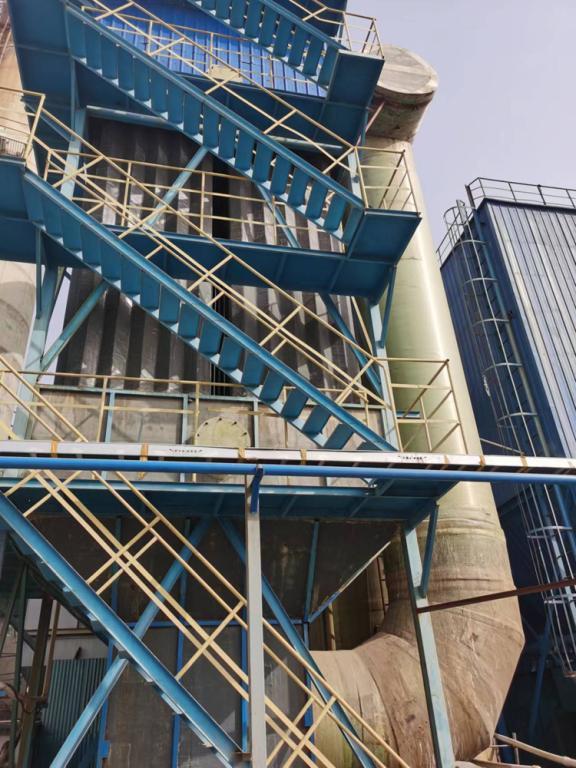
II. Selection Points
Treatment Efficiency:
Select equipment based on local environmental standards. For ultra-low emission requirements (NOx ≤ 50mg/m³, SO₂ ≤ 35mg/m³), a combination of SCR and wet desulfurization is needed.
Equipment Resistance:
Lower resistance means lower energy consumption. For example, SCR reactors require optimized flow grid design to ensure uniform flue gas distribution and reduce pressure drop.
Operating Costs:
Include energy consumption, denitrifying/desulfurizing agent consumption, and maintenance costs. For instance, SCR catalysts require regular replacement, which is costly; SNCR has low operating costs but limited efficiency.
Footprint and Installation Conditions:
Polymer denitrification equipment features an integrated design, suitable for heating companies with limited space; wet desulfurization requires a wastewater treatment system and occupies a larger area.
Applicable Fuel Types:
Coal-fired boilers require significant desulfurization and denitrification; biomass boilers, due to high nitrogen content, need enhanced denitrification measures; gas boilers have lower NOx emissions and can use simpler processes.
| Industry Category | Machinery & Equipment/Boilers/Boilers & Auxiliary Equipment |
|---|---|
| Product Category | |
| Brand: | 实恒除尘 |
| Spec: | SCR |
| Stock: | 10 |
| Manufacturer: | 泊头市实恒除尘设备有限公司 |
| Origin: | 111309 |


