


Biomass fuel lime rotary kiln denitrification equipment
Contact Info
- Add:Changle Village, Wangwu Town, Botou City, Zip: 062155
- Contact: 常守峰
- Tel:13011424488
- Email:747569321@qq.com
Other Products


Denitrification Equipment for Biomass-Fueled Lime Rotary Kiln
Technical Solution for Denitrification Equipment in Biomass-Fueled Lime Rotary Kiln
The denitrification equipment for biomass-fueled lime rotary kilns requires customized design based on the combustion characteristics of biomass fuel (high alkali metal content, low initial nitrogen oxide emissions) and the process features of the rotary kiln (high-temperature calcination, continuous operation). The core points of the technical solution are as follows:
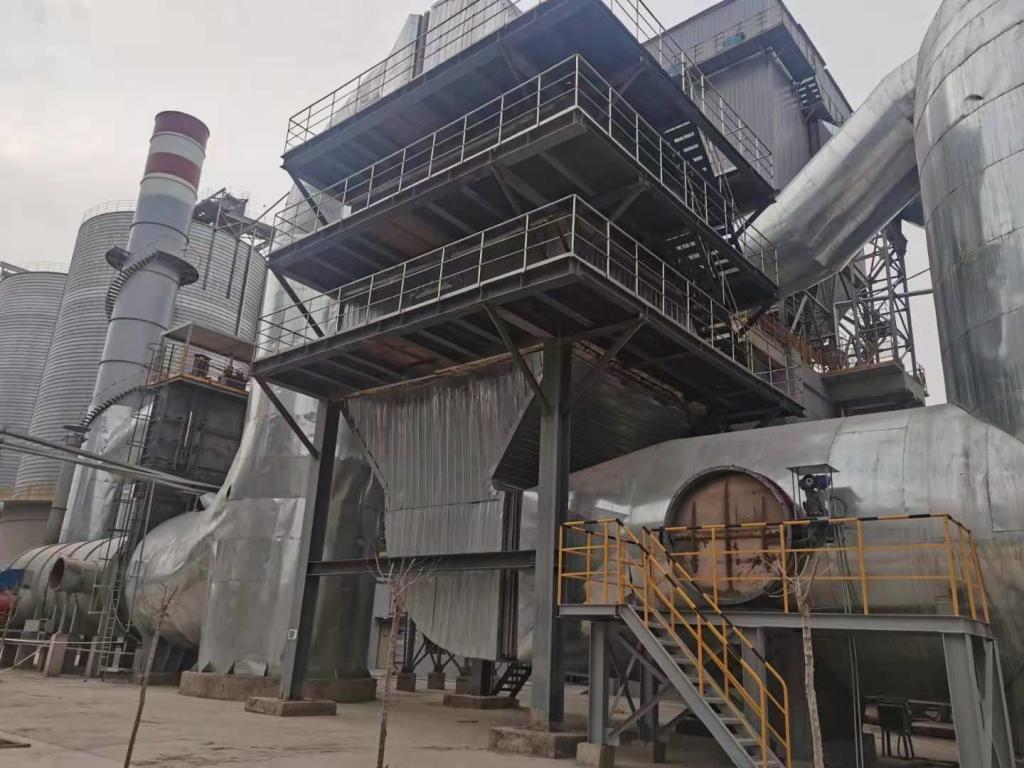
I. Selection of Denitrification Technology Route
- SNCR (Selective Non-Catalytic Reduction) Technology
- Applicability: The temperature window of the rotary kiln (850-1100°C) highly matches the SNCR reaction temperature (900-1100°C).
- Reductant Selection: Urea solution is preferred (safer than ammonia water, low corrosiveness), with concentration controlled at 10%-20%, precisely injected via metering pumps.
- Lance Layout:
- Axial Multi-Point Arrangement: Install 3-5 sets of lances from the kiln head to the kiln tail, covering three temperature ranges: 850°C, 950°C, and 1050°C.
- Swirl Atomization Lance: Utilizes dual-fluid atomization technology, with atomized particle size ≤50μm, ensuring thorough mixing of the reductant and flue gas.
- SCR (Selective Catalytic Reduction) Technology
- High-Temperature SCR Solution:
- Catalyst carrier uses titanium-based material, with temperature resistance ≥1100°C and sulfur poisoning resistance ≥2000 hours.
- Reactor structure: Plate-type catalyst modules, space velocity design ≤3000h⁻¹, ammonia slip rate ≤3ppm.
- Low-Temperature SCR Solution (if deep denitrification is required):
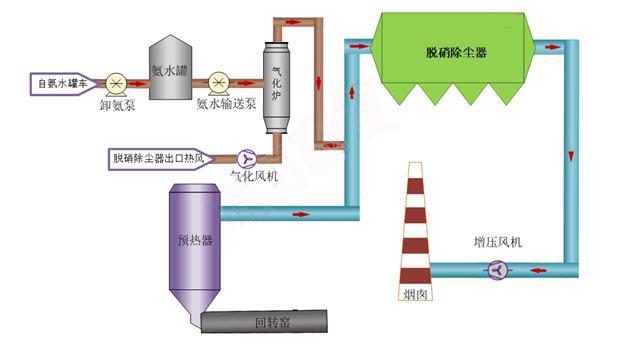
- Catalyst temperature resistance range: 200-400°C, requires adding a flue gas heat exchanger at the kiln tail to cool the flue gas to approximately 320°C.
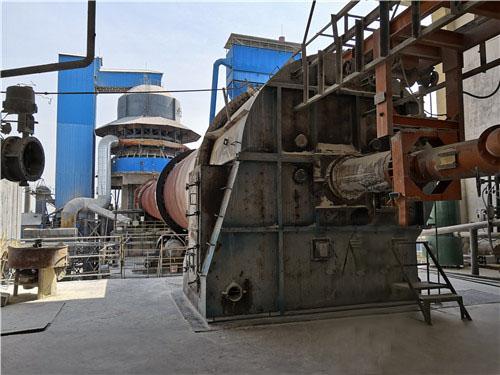
- Catalyst temperature resistance range: 200-400°C, requires adding a flue gas heat exchanger at the kiln tail to cool the flue gas to approximately 320°C.
- High-Temperature SCR Solution:
II. System Integration and Process Optimization
- Reductant Preparation and Delivery System
- Urea Solution Preparation Station:
- Equipped with a 10m³ storage tank, dissolution concentration 10%-20%, heating device maintains solution temperature at 30-40°C (to prevent crystallization).
- Metering Pump Set: Dual pumps (one in use, one standby), flow range 0-100L/h, accuracy ±1%.
- Compressed Air System:
- Provides 0.5-0.7MPa air source for urea solution atomization and lance purging.
- Urea Solution Preparation Station:
- Flue Gas Parameter Monitoring and Control System
- Online Monitoring Instruments:
- NOx concentration analyzers at kiln head and tail (range 0-2000mg/m³, accuracy ±5%).
- Ammonia slip monitor (range 0-10ppm, response time ≤1 second).
- Intelligent Control System:
- PLC-based closed-loop control automatically adjusts urea injection volume based on NOx setpoint (≤100mg/m³).
- Temperature feedforward control: Dynamically adjusts the injection ratio of each lance based on the temperature distribution inside the kiln.
- Online Monitoring Instruments:
III. Equipment Selection and Performance Indicators
Key Equipment Parameters
Equipment Name Model Specification Technical Requirements SNCR Lance QSL-2000 Temperature resistance 1200°C, atomization angle 90°, lifespan ≥8000h Urea Solution Pump DBY-25 Flow rate 25L/h, pressure 0.5MPa High-Temperature Catalyst HT-V2O5-WO3/TiO2 Active temperature 900-1100°C, specific surface area ≥60m²/g Ammonia Slip Analyzer FGA-4100 Range 0-10ppm, detection limit 0.1ppm Performance Guarantees
- Denitrification efficiency: ≥85% (when inlet NOx concentration ≤500mg/m³).
- Ammonia slip rate: ≤3ppm (meeting ultra-low emission requirements).
- System resistance: ≤500Pa (negligible impact on kiln system operation).
IV. Operation, Maintenance, and Safety Measures
- Routine Maintenance
- Lance Inspection: Clean nozzle dust accumulation weekly; replace worn parts (e.g., atomization disc).
- Catalyst Regeneration: Perform purging and dust cleaning every 6 months; replace when activity decreases by ≥20%.
- Safety Protection
- Urea Solution Leak Protection: Storage tank equipped with high-level alarm and emergency shut-off valve.
- High-Temperature Protection: Lances and pipelines use high-temperature ceramic fiber insulation, surface temperature ≤60°C.
Conclusion
Denitrification for biomass-fueled lime rotary kilns requires the integrated application of SNCR and SCR technologies. Through precise lance layout, efficient catalyst selection, and intelligent control systems, stable NOx emission compliance (≤100mg/m³) can be achieved. It is recommended to prioritize the SNCR + high-temperature SCR combined process to balance economy and denitrification efficiency, while paying close attention to the stability of the reductant delivery system and the catalyst's sulfur resistance.
| Industry Category | Machinery & Equipment/Desulfurization & Dust Removal/Denitrification Equipment |
|---|---|
| Product Category | |
| Brand: | 实恒 |
| Spec: | SH-SCR |
| Stock: | 10 |
| Manufacturer: | 泊头市实恒除尘设备有限公司 |
| Origin: | 111309 |


