


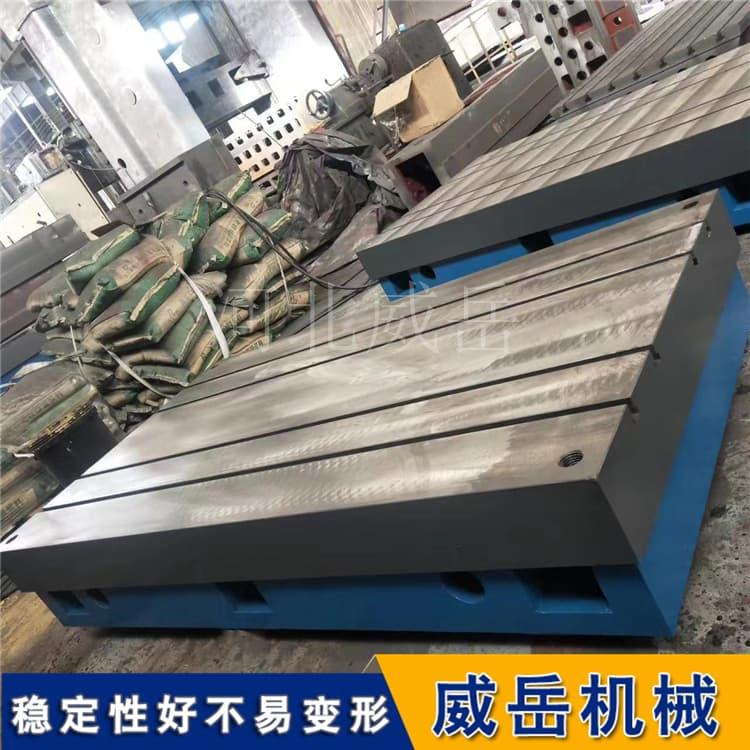
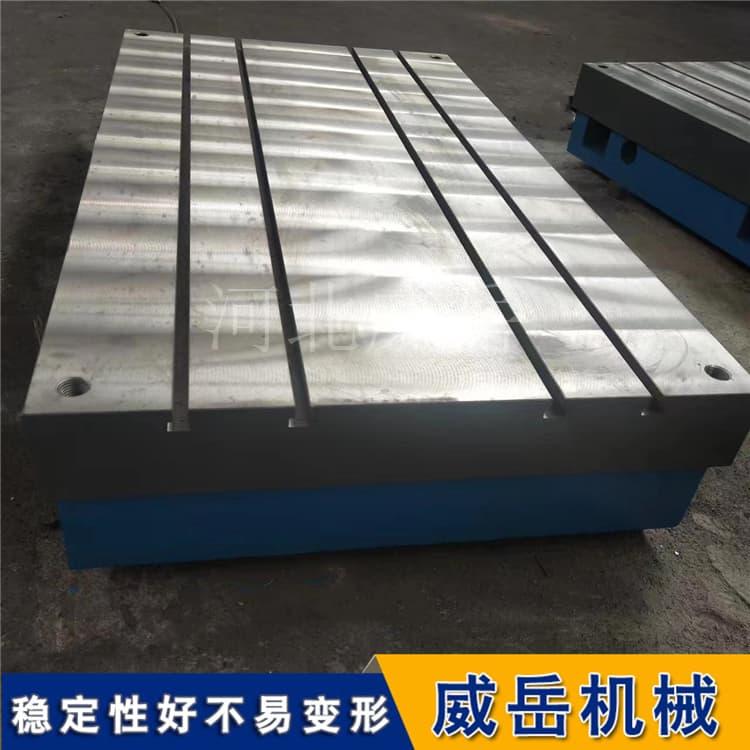
Cast iron T-slot platform plate
Contact Info
- Add:, Zip: 061000
- Contact: 谢佳宁
- Tel:15350773479
- Email:3622313939@qq.com
Other Products


Introduction to the Exquisite Craftsmanship of Cast Iron T-Slot Tables
As a fundamental tool in the field of mechanical manufacturing, the precision and usage standards of cast iron T-slot tables directly impact processing efficiency and product quality. This article provides an in-depth analysis of the core aspects of their manufacturing process and key considerations during use, offering practical reference for industry practitioners.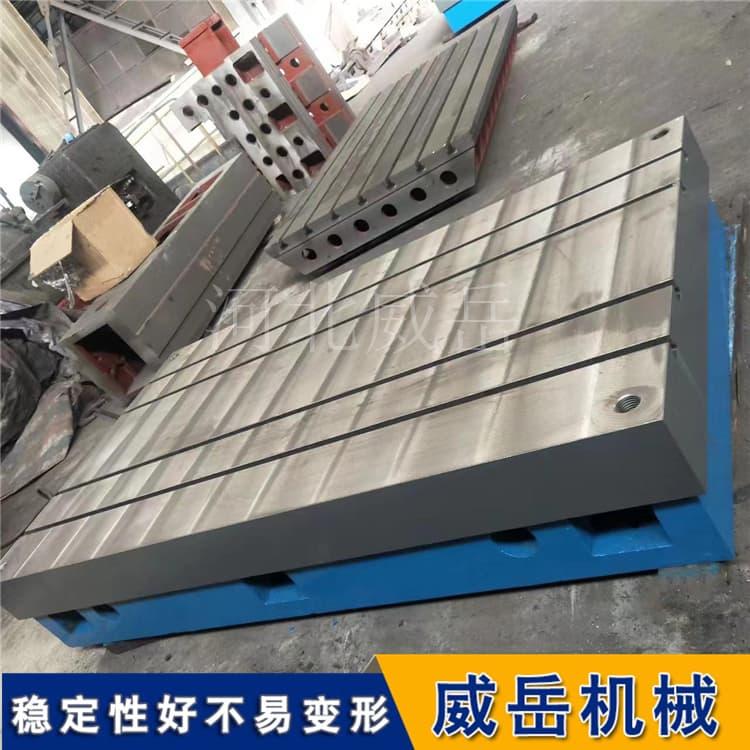
 .
.
I. Key Process Essentials of Cast Iron T-Slot Tables
1. Material Selection and Melting Technology
HT200 or HT250 gray cast iron is used as the base material, with composition control of molten iron achieved through medium-frequency electric furnace melting. Key indicators include a carbon equivalent (CE) controlled at 3.6%–3.8% and a silicon-to-carbon ratio maintained at 0.6–0.8, ensuring both strength and vibration damping. One leading manufacturer added 0.2% tin, stabilizing the table hardness in the HB180–220 range and improving wear resistance by 15%.
2. Innovations in Casting Process
Resin sand molding combined with a stepped gating system is employed to avoid cold shut defects. Three-dimensional simulation software is introduced for solidification analysis, reducing shrinkage porosity from the traditional 3% to below 0.8%. A grid-like reinforcement design at the bottom of the table ensures rigidity while reducing weight by 15%.
3. Critical Period of Aging Treatment
Natural aging requires 6–12 months, while artificial aging uses a stepped heating method: heating at 80°C/h to 550°C, holding for 4 hours, then cooling slowly at 20°C/h to 200°C before removal. Laboratory data show that tables subjected to standardized aging can control annual deformation within 0.02 mm/m.
4. Three-Stage Machining
Rough machining leaves a 3 mm allowance, using CBN tools to ensure reference surface flatness.
Semi-finishing adopts a "checkerboard" tool path, with temperature controlled in a 20±1°C environment.
Fine grinding uses PVA wheels, achieving a surface roughness of Ra 0.8 μm.
II. Five Core Indicators for Precision Control
1. Flatness Tolerance
According to GB/T 22095-2008 standard, Grade 0 tables have a tolerance of 8 μm over a 1000 mm length. Laser interferometer tests show that advanced enterprises can achieve local flatness control of 5 μm/m².
2. T-Slot Accuracy
Slot width tolerance is controlled to H7 grade, with perpendicularity of the side relative to the reference surface ≤0.02 mm/100 mm. One project used an optical autocollimator for inspection, achieving a breakthrough in slot parallelism of 0.01 mm/m.
3. Surface Quality Requirements
Hardness variation on the working surface should not exceed HB 15, with no more than two pores exceeding 0.5 mm in diameter per 25 mm². Fluorescent penetration testing ensures micro-cracks are ≤0.1 mm.
With the application of digital twin technology in the full lifecycle management of tables, future cast iron T-slot tables will develop towards "traceable precision and predictable status." Mastering these process essentials and usage tips is essential to fully leverage the value potential of this fundamental tooling.
Weiyue Machinery, Ms. Xie, 15350773479
| Industry Category | Hardware & Tools/Castings/Iron Castings |
|---|---|
| Product Category | |
| Brand: | 河北威岳 |
| Spec: | 2000*4000 |
| Manufacturer: | 河北威岳机械 |
| Origin: | 111309 |


