


Custom HT250 Cast Iron Platform
Contact Info
- Add:, Zip: 061000
- Contact: 谢佳宁
- Tel:15350773479
- Email:3622313939@qq.com
Other Products


Laboratory Iron Floor: How to Choose Cast Iron Platforms and T-Slot Rails
In the fields of industrial production, machining, and measurement, cast iron platforms and T-slot rails serve as fundamental tooling equipment, and their selection directly impacts work efficiency and machining accuracy. Faced with a diverse range of products on the market, how can one scientifically choose the right type based on actual needs? This article will provide a systematic purchasing guide from the perspectives of material properties, structural design, application scenarios, and maintenance costs.
1. Material and Process: Core Factors Determining Equipment Lifespan
Cast iron platforms are typically made of HT200 or HT250 gray cast iron cast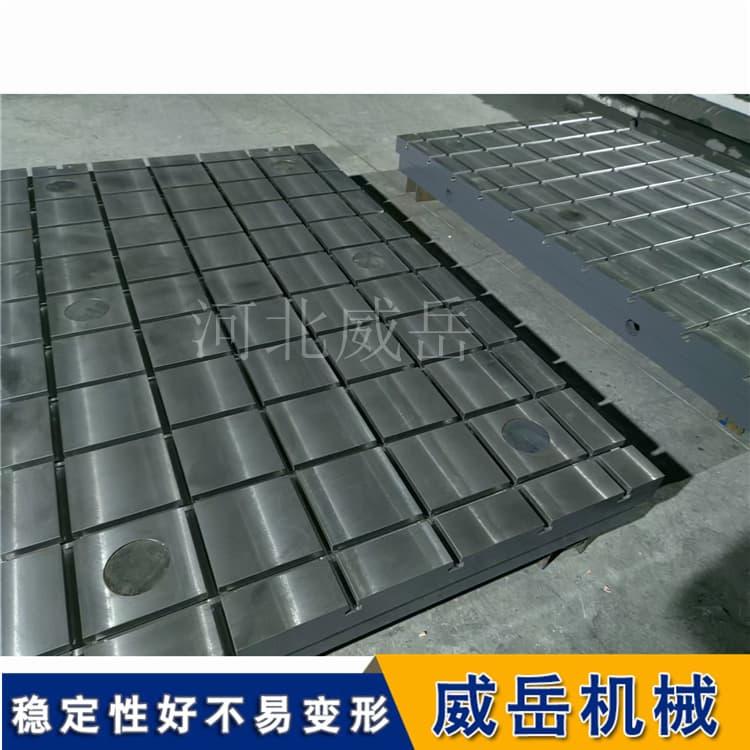
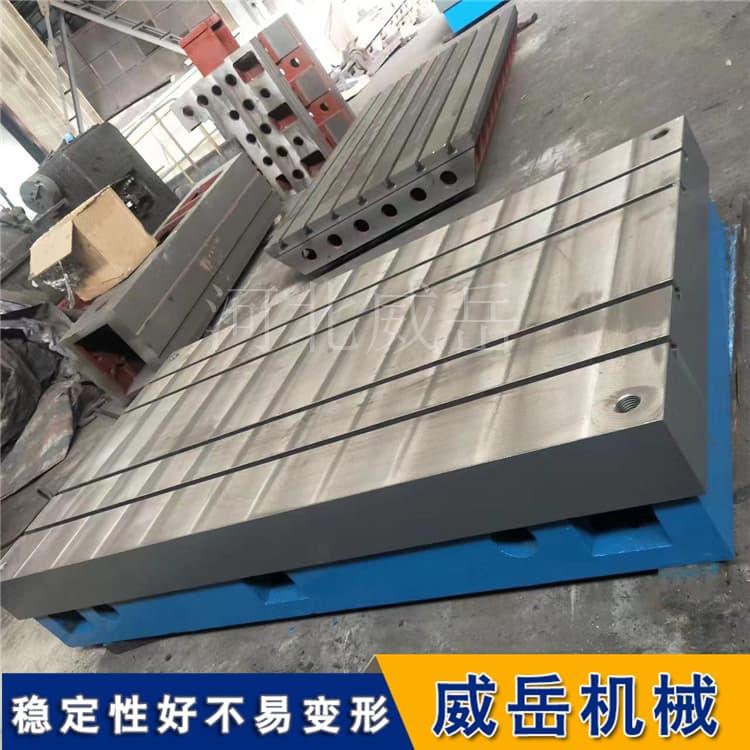
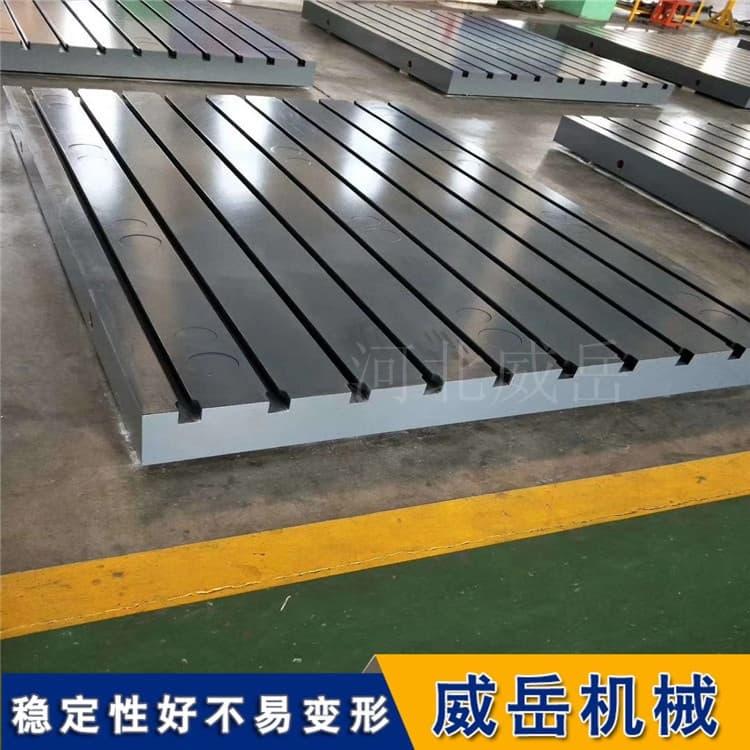 . After aging treatment, residual stress can be reduced by over 90%. The products undergo three rounds of artificial aging treatment, with each session spaced 24 hours apart, ensuring stable internal metallographic structure. It is worth noting that some manufacturers use iron to reduce costs, with tensile strength only around 150 MPa, far below the standard requirement of 200 MPa. Consumers can make preliminary judgments by observing the number of surface pores on the castings (≤3 per square meter) and the sound when tapped (a crisp metallic ring).
The material selection for T-slot rails is more diverse. For ordinary machining scenarios, 45 steel with quenching treatment is commonly used, achieving a surface hardness of H45-50. For high-precision applications, GCr15 bearing steel is recommended, which can reach a hardness of HRC60 after deep cooling treatment, increasing wear resistance by three times. A recent industry innovation involves using a bimetal composite process, where a 0.5mm thick cobalt-based alloy layer is laser-cladded onto the base steel surface, enabling the rail to surpass 100,000 cycles in testing.
2. Structural Parameters: The Art of Balancing Precision and Functionality
The load-bearing capacity of a cast iron platform depends on its reinforcement rib design. Standard platforms use a grid-shaped reinforcement rib pattern, with rib thickness being 60%-80% of the tabletop thickness. For heavy-duty platforms above 5 tons, a honeycomb reinforcement structure is recommended, as it can increase rigidity by 40%. Work surface accuracy is divided into grades 0-3. A grade 1 accuracy (flatness of 0.02mm/m) is sufficient for ordinary bench work platforms, while coordinate measuring platforms require grade 0 accuracy (0.01mm/m).
The key to selecting T-slot rails lies in the slot type and standard. The internationally recognized DIN standard specifies a 45° inclination for T-slots, with a slot depth to slot width ratio of 1:1.5. When making a purchase, it is important to note: narrow slots (e.g., 10mm slot width) are suitable for lightweight fixtures but have weaker anti-torsion capabilities; wide slots (28mm and above) can withstand 10 kN of lateral force but reduce the work surface. The newly released ISO230-1:2024 standard recommends that the adjacent slot spacing error for machine tool rails should be controlled within ±0.05mm.
Acceptance testing for T-slot rails should include operational tests. It is advisable to perform 100 cycles of no-load reciprocating motion and then use a laser interferometer to detect the straightness attenuation value. For maintenance, establish a lubrication record; using a progressive lubrication system can reduce grease consumption by 50%. Experience from a heavy machinery factory shows that monthly inspection of rail surface roughness with a white light interferometer can predict wear trends three months in advance.
With the development of smart manufacturing, cast iron platforms are being integrated with digital twin technology. By embedding fiber optic sensors, micro-deformations of the platform can be monitored in real-time. The intelligent upgrade of T-slot rails is even more cutting-edge; one laboratory has achieved a 92% accuracy rate in predicting the remaining lifespan of sliders through vibration signal analysis. Over the next five years, modularization and intelligence will become mainstream trends in tooling equipment development. However, traditional accuracy standards and mechanical principles remain the foundation of selection, and users must find a balance between innovation and tradition.
Ms. Xie from Wei Yue Machinery 15350773479
| Industry Category | Hardware & Tools/Castings/Iron Castings |
|---|---|
| Product Category | |
| Brand: | 河北威岳 |
| Spec: | 2000*4000 |
| Manufacturer: | 河北威岳机械 |
| Origin: | 111309 |


