


Motor no-load test bench
Contact Info
- Add:, Zip: 061000
- Contact: 谢佳宁
- Tel:15350773479
- Email:3622313939@qq.com
Other Products


What are the specific processes involved in the manufacturing of cast iron T-slot base plates?
As a critical component in the fields of mechanical manufacturing and testing, the importance of the T-slot base plate's process flow is self-evident. This article will detail the specific steps of the T-slot base plate manufacturing process, from material selection, casting preparation, forging and machining, precision control, to post-processing, analyzing the entire manufacturing process of T-slot base plates.
1. Material Selection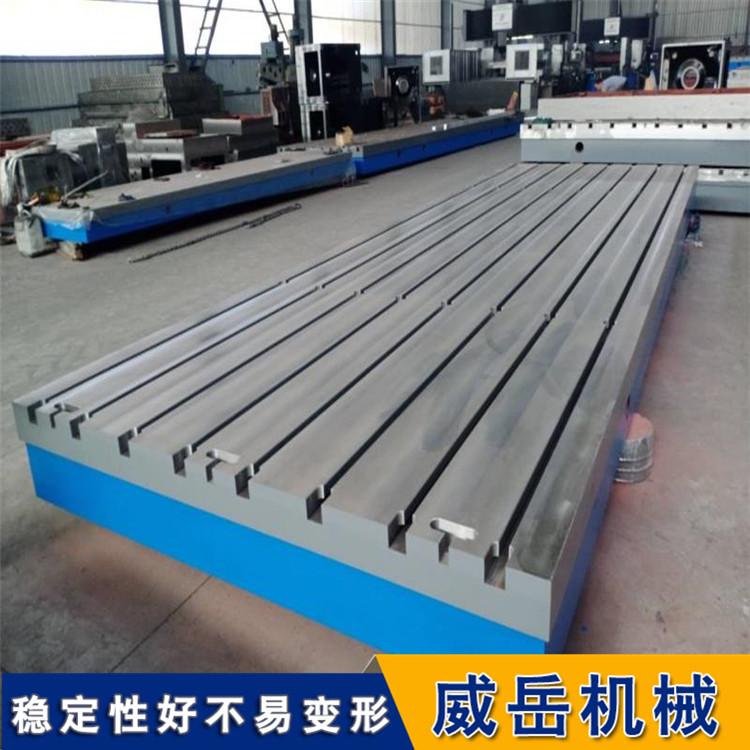
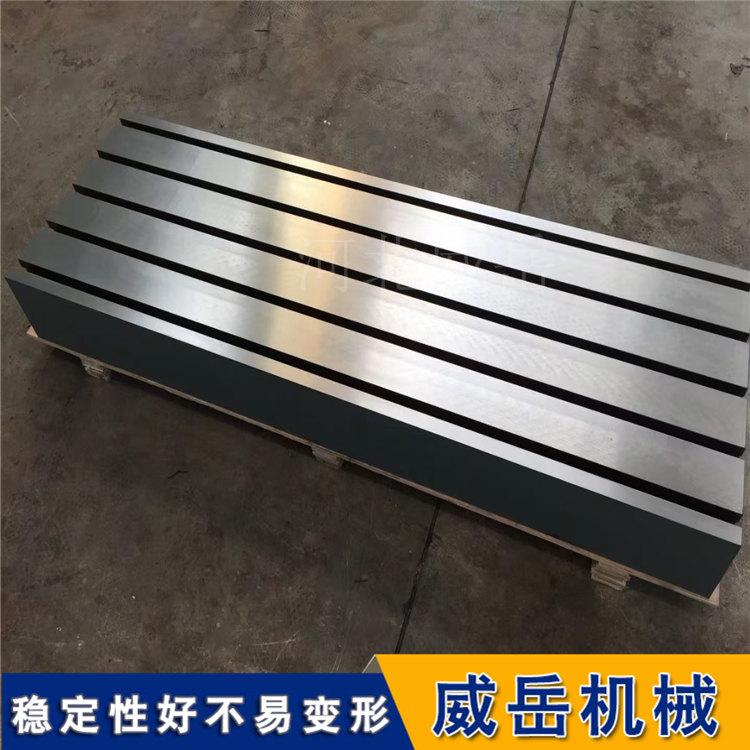
Material selection for T-slot base plates is the primary step in the manufacturing process, directly impacting the product's hardness, wear resistance, stability, and toughness. Generally, T-slot base plates are primarily made of high-strength gray cast iron HT200-300. This material not only offers moderate hardness and excellent wear resistance but also provides superior stability and toughness. The working surface hardness is controlled within the range of HB170-240, ensuring both wear resistance and preventing workpiece damage due to excessive hardness during use.
Additionally, for specific application scenarios requiring higher strength and hardness, alloy cast iron materials are used. By adding alloying elements, the material's strength and hardness are further enhanced to meet more demanding application requirements.
2. Casting Preparation
After material selection, pre-casting preparations are equally crucial. First, the mold must be designed and manufactured to ensure its precision and dimensions meet product requirements. Mold design must account for factors such as shrinkage and deformation during casting to ensure dimensional accuracy of the castings.
Second, raw materials must undergo pre-treatment before casting, including impurity removal and chemical composition control, to ensure casting quality. Additionally, preparations such as melting and pouring are required. During melting, temperature and time must be strictly controlled to ensure the uniformity and stability of the molten metal. During pouring, pouring speed and temperature must be regulated to prevent defects in the castings.
3. Forging and Machining
Forging is the core step in the manufacturing process of T-slot base plates. During forging, scraping technology is employed—an ancient yet refined technique that involves manually or mechanically scraping the platform surface to achieve a flat and smooth finish. Scraping not only removes rough traces from the cast iron surface but also significantly enhances the platform's precision. The allowable surface roughness Ra after scraping is typically within 5μm, ensuring the platform's stability and reliability during use.
During forging, cutting parameters must be strictly controlled to avoid damaging the workpiece. Additionally, for T-slot machining, rough planing and fine planing are performed based on the slot size and precision requirements to ensure the accuracy of right-angle slots and side grooves meets standards. The rough planing stage primarily removes excess metal and burrs generated during casting, preparing the workpiece for fine planing. The fine planing stage further refines the machining to ensure dimensional accuracy and surface roughness of the T-slots.
4. Precision Control
Precision control is the core aspect of the T-slot base plate manufacturing process. In terms of specifications, the length and width dimensions of the platform can be customized according to the buyer's drawings, with common specifications ranging from 1000x1000 to 3000x6000. In terms of accuracy, the process follows the national standard metrological verification regulations.
During precision control, high-precision measuring equipment and methods, such as laser rangefinders and coordinate measuring machines, are used to ensure the accuracy and reliability of measurement results. Additionally, measurement data must be processed and analyzed to promptly identify and correct deviations, ensuring the product's precision meets design requirements.
Furthermore, the surface quality of T-slot base plates must be strictly controlled. The casting surface should be free of mold sand and smooth, with firmly applied paint. For precision grades 0 to 3, sand holes with diameters smaller than 15mm on the working surface are allowed to be plugged with the same material, provided the hardness of the plug is lower than that of the surrounding material. The number of plugged sand holes on the working surface should not exceed four, and the spacing between them should be no less than 80mm. The T-slot base plate working surface must not have defects such as sand holes, air holes, cracks, slag inclusions, shrinkage porosity, scratches, bumps, or rust spots that affect appearance and performance.
Weiyue Machinery, Ms. Xie, 15350773479
| Industry Category | Machinery & Equipment/Commercial Equipment/Bag Closing Machines |
|---|---|
| Product Category | |
| Brand: | 河北威岳 |
| Spec: | 2000*4000 |
| Manufacturer: | 河北威岳机械 |
| Origin: | 111309 |


