


Glycerol
Other Products
Main Applications
Food Industry
As a sweetener (sweetness about 60% of sucrose), used in pastries, beverages, jams, etc., and does not affect blood sugar (suitable for low-calorie foods).
As a humectant to prevent food (such as bread, candy) from drying and hardening, extending shelf life.
Used as a solvent and thickener to improve food texture and consistency.
Pharmaceutical and Cosmetic Industries
Humectant: A core ingredient in skincare products (creams, lotions), toothpaste, shampoo, etc., maintaining skin and hair moisture by absorbing water.
Pharmaceutical excipient: As a solvent for injections (e.g., glycerol injection) and ointment bases (e.g., glycerin enema, utilizing hypertonicity to stimulate bowel movement).
Preparation of nitroglycerin (vasodilator, used to treat angina).
Chemical Industry
Raw material for synthetic resins (such as polyurethane foam, alkyd resins), used in coatings, adhesives, plastics, etc.
Production of surfactants (such as glycerol fatty acid esters), used in detergents and emulsifiers.
As an antifreeze agent (lower toxicity than ethylene glycol), used in automotive coolant and laboratory low-temperature baths.
Other Applications
Tobacco industry: Maintains tobacco moisture and improves combustibility.
Textile industry: Used as a softener and lubricant to prevent fiber embrittlement.
Agriculture: Used as a plant antifreeze and foliar fertilizer to improve crop stress resistance.
CAS NO: 56-81-5
EC NO: 200-289-5
Molecular Formula: C3H8O3
Molecular Weight: 92.0938
Aliases: ; Glycerol; Trihydroxypropane; Crude glycerin; 1,2,3-Propanetriol;
Structure: 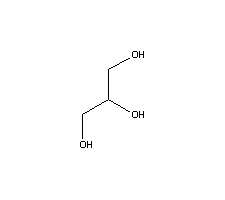
| Industry Category: | Chemicals/Coating Solvents/Glycerol |
|---|---|
| Product Category: | |
| Brand: | |
| Spec: | |
| Stock: | |
| Origin: |


