


Sodium nitrite
Other Products
Main Uses
Food Industry:
As a meat preservative: Inhibits the growth and reproduction of Clostridium botulinum (an anaerobic bacterium that can produce deadly botulinum toxin), extending the shelf life of meat.
As a color fixative: Reacts with myoglobin in meat to generate bright red nitrosylmyoglobin, keeping the meat looking fresh and colorful (e.g., bacon, sausages, ham).
Strict dosage control required: China's food safety standards stipulate that the maximum use of sodium nitrite in meat products is 0.15 g/kg, and the residue shall not exceed 30 mg/kg (calculated as sodium nitrite); excessive amounts can lead to poisoning.
Chemical and Pharmaceutical:
Used in the synthesis of azo dyes, nitro compounds, hydrazine compounds, etc., and is an important intermediate in the dye industry.
In the pharmaceutical field, it is used to produce vasodilators, antihypertensive drugs, etc., and can also serve as a diazotization reagent in organic synthesis.
Metal Treatment:
As a corrosion inhibitor: Added to industrial circulating water or metal cutting fluids to form a protective film to prevent corrosion of metals such as steel.
Used for metal surface treatment (e.g., electroplating) to improve coating quality.
Other Uses:
In the laboratory, it serves as an analytical reagent for detecting amines, iodides, etc.
Used to prepare nitrite esters, or as a bleaching agent and reducing agent (e.g., for bleaching silk and linen).
CAS NO: 7632-00-0
EC NO: 231-555-9
Formula: NaNO2
Molecular Weight: 68.9953
Alias: ;Sodium Nitrite;Sodium Nitrite (Food Grade);
Structure: 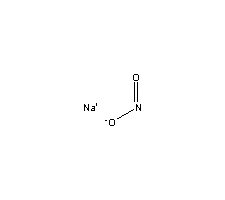
| Industry Category: | Chemicals/Inorganic Salts/Nitrates |
|---|---|
| Product Category: | |
| Brand: | |
| Spec: | |
| Stock: | |
| Origin: |


