


intelligent spray painting robot
Contact Info
- No.3099 Chang'an Road, East Taihu Lake Ecotourism Resort (Taihu New Town), 215200
- 何彦武
- 13157670256
- jiersrobot@163.com
Jerrís Intelligent Spray Painting RobotCommon Spray Painting Processes in Coating
JERRYS ROBOT
1. Roller Coating
Roller coating uses a roller as the carrier of the coating. The coating forms a wet film of a certain thickness on the surface of the roller. Then, as the roller rotates and comes into contact with the object to be coated, it applies the coating onto the surface of the object. Roller coating is suitable for flat objects and is widely used in the coating of metal plates, plywood, fabrics and paper, especially for metal coil coating.
2. Air Spray Painting (Spray Gun + Compressed Air)
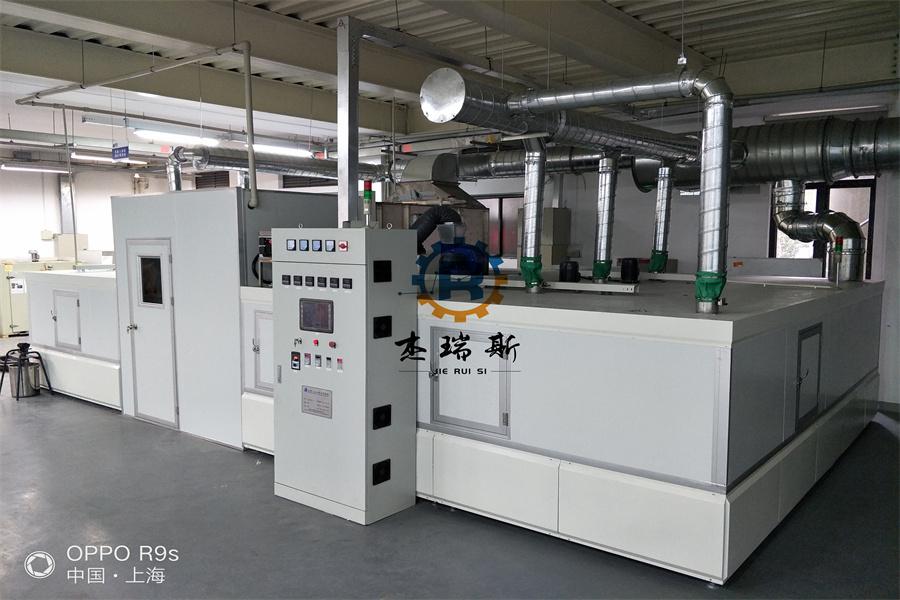
Air spray painting is a widely used coating process in current paint coating construction. It uses the airflow of compressed air to flow through the nozzle of the spray gun, creating a negative pressure. This negative pressure draws the paint from the suction tube, which is then sprayed out through the nozzle to form paint mist. The paint mist is sprayed onto the surface of the part to be coated, forming a uniform paint film.
3. Electrostatic Spray Painting
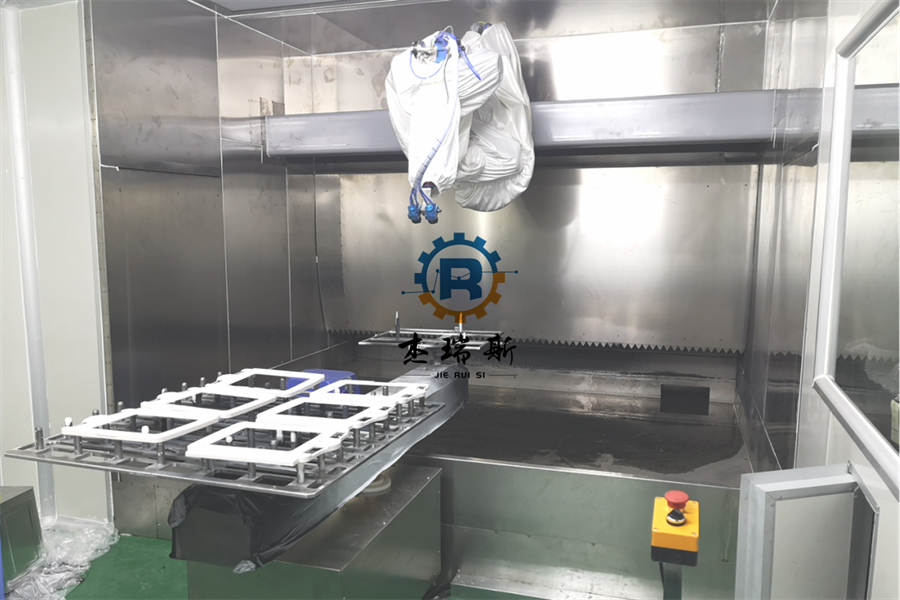
Electrostatic spray painting is divided into liquid electrostatic spray painting and powder electrostatic spray painting. Its principle is to use a high-voltage electrostatic electric field to make negatively charged coating particles move in a direction opposite to the electric field and adhere to the surface of the workpiece. The electrostatic spray painting equipment consists of a spray gun, a spray cup, and a high-voltage power supply for electrostatic spray painting, etc. Liquid electrostatic spray guns are divided into manual water-based electrostatic spray guns, manual oil-based electrostatic spray guns, automatic water-based electrostatic spray guns, automatic oil-based electrostatic spray guns, water-based automatic electrostatic rotary cup atomizers, oil-based automatic electrostatic rotary cup atomizers, etc. The paint supply system is generally divided into low-pressure paint supply pressure tanks or diaphragm pumps, high-pressure plunger pump paint supply systems, automatic paint proportioning and mixing systems, automatic color change control systems, automatic cup head cleaning control systems, precision flow closed-loop control systems, gear pump precision flow control systems, etc.
4. Electrophoretic Coating
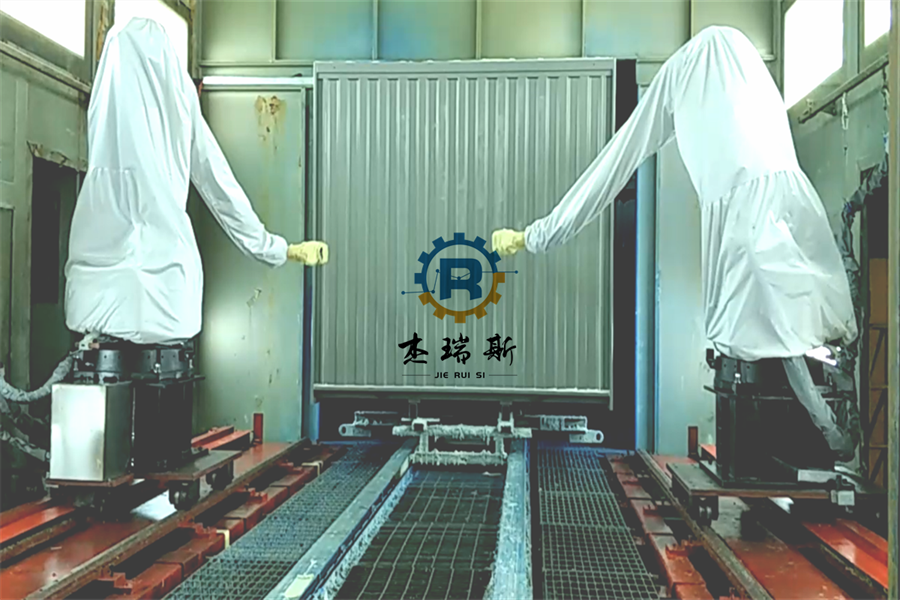
Electrophoretic coating is a coating method that uses an applied electric field to make particles such as pigments and resins suspended in the electrophoresis liquid migrate directionally and deposit on the surface of a substrate that serves as one of the electrodes. The principle of electrophoretic coating was invented in the late 1930s, but it was not developed and applied industrially until after 1963. Electrophoretic coating is a special film-forming method developed over the past 30 years and is the most practically significant construction process for water-based paints. The electrophoretic process is divided into anodic electrophoresis and cathodic electrophoresis. If the coating particles are negatively charged and the workpiece is the anode, the coating particles deposit on the workpiece to form a film under the action of electric field force, which is called anodic electrophoresis. Conversely, if the coating particles are positively charged and the workpiece is the cathode, the coating particles deposit on the workpiece to form a film, which is called cathodic electrophoresis. The power supply coating process is generally used for the primer rust prevention of the front treatment of automobile bodies, and it is an all-round, dead-angle-free electrophoretic process. It has the characteristics of water solubility, non-toxicity, and easy automatic control, and has been rapidly and widely applied in industries such as automobiles, building materials, hardware, and home appliances.
5. High-Pressure Airless Spray Painting
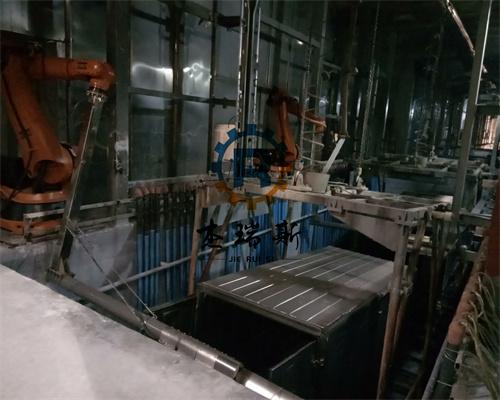
Also known as airless spray painting, it refers to the use of a high-pressure plunger pump to directly pressurize the paint, forming high-pressure paint that is sprayed out through a manual or automatic spray gun, forming an atomized airflow that acts on the surface of the object (wall or wood surface). Compared with air spray painting, the paint film is uniform and has no granular feel. Because it is isolated from air, the paint dries cleanly. Airless spray painting can be used for the construction of high-viscosity paints, and it also has clear edges, making it even suitable for some spray painting projects with boundary requirements. For example: anti-corrosion spray painting for steel box bridges, anti-corrosion spray painting for ships, construction machinery industry, anti-corrosion spray painting for bridge and railway pads or shock-absorbing supports. Depending on the type of machinery, it is also divided into pneumatic airless sprayers, electric airless sprayers, internal combustion airless sprayers, and many other types. Different spray painting methods are selected according to different spray painting processes. The application of intelligent spray painting robots is the future development trend.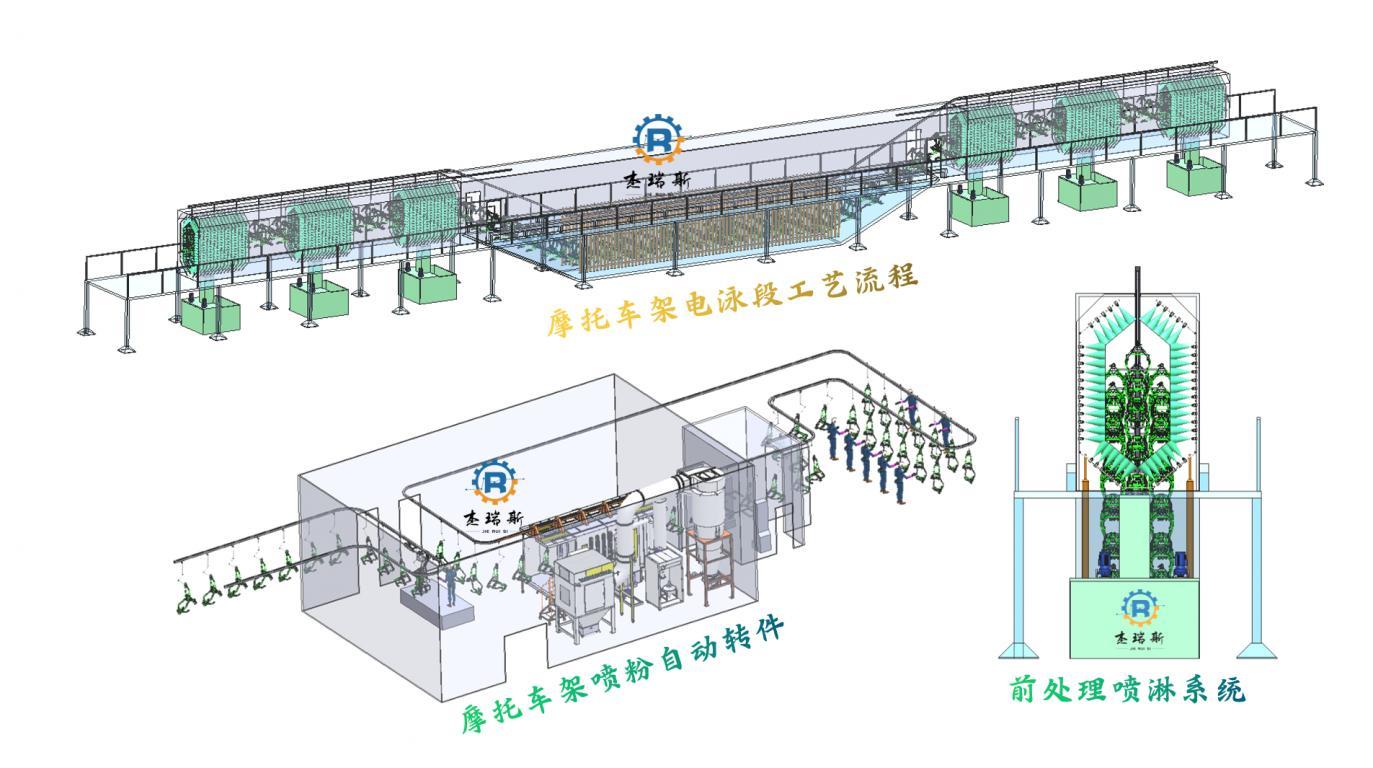
| Machinery & Equipment/Fans & Ventilation Equipment/Fan Coil Units | |


